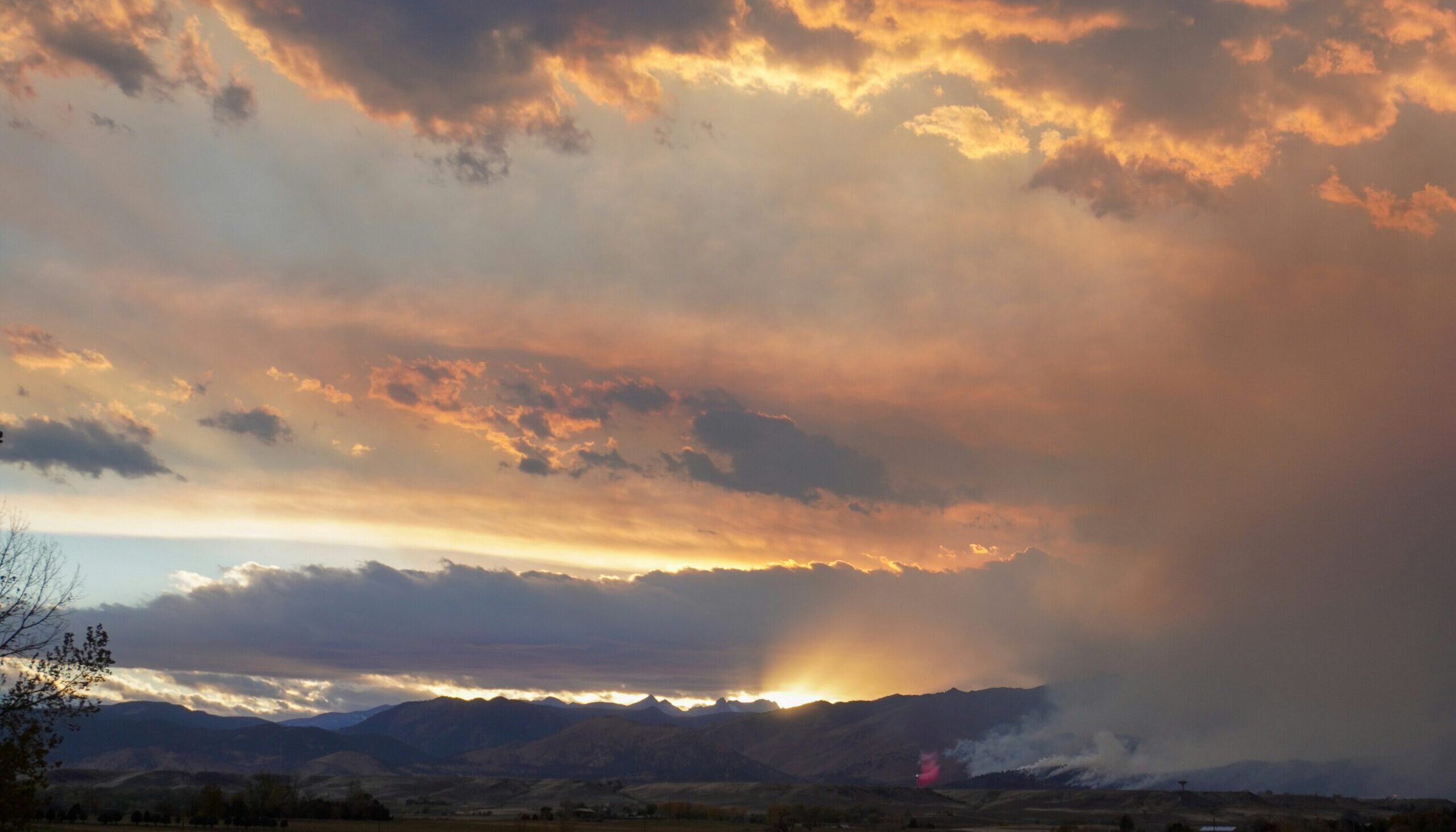
About Boulder County Wildfire Partners
Colorado’s dry climate—characterized by low humidity, periodic drought, and strong winds—can create conditions where wildfires are more likely to occur. In recent decades, warmer temperatures and longer dry periods have contributed to longer fire seasons and the potential for larger wildfires. In fact, the average number of fires per year have climbed from 13 in the 1990s to nearly 50 in the 2000s, and now surpasses 70 a year in the 2020s.
Boulder County Wildfire Partners is a countywide and nationally recognized wildfire mitigation program that helps residents reduce the risk of home ignition before a wildfire occurs. Funded through the voter-approved Wildfire Mitigation Sales Tax in 2022, the program provides on-site home assessments, customized mitigation recommendations, defensible space guidance, and rebates that help homeowners complete critical mitigation work.
Wildfire Partners translates wildfire science into practical, household-level action—focusing on the conditions most likely to cause homes to ignite, such as embers, nearby vegetation, and combustible materials adjacent to structures. By pairing education with financial incentives and connections to vetted contractors, the program empowers all homeowners to take meaningful steps to help protect their homes while strengthening wildfire resilience across communities throughout Boulder County.
In Boulder County, we have to continue learning how to live with wildfire. Programs like Wildfire Partners bring homeowners, HOAs, local governments, and mitigation specialists together to create more wildfire-resilient communities.
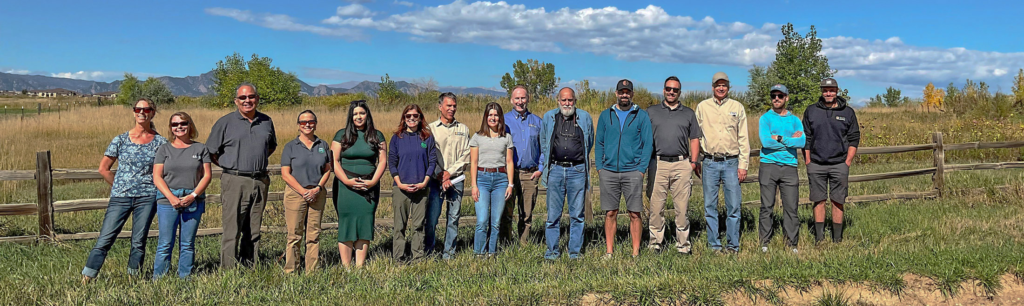
Turning Wildfire Awareness Into Action
Across Boulder County, residents increasingly understand that wildfire preparedness is part of living in Colorado. And homeowners are taking steps to reduce risk—clearing vegetation, hardening structures, and learning how defensible space can protect their homes and neighborhoods.
Wildfire Partners has played a key role in that progress. Since 2022, the program has helped residents translate wildfire science into practical mitigation actions through home assessments, education, and financial incentives.
But as wildfire risk expands beyond historically fire-prone areas, the next challenge became clear: how do you scale that momentum across an entire county?
Our partnership with Wildfire Partners had a focused charge: develop and execute a public awareness campaign that both introduces the program to more residents and encourages sign-ups for the Rebate Program—which provides residents up to $500 for completing an approved mitigation action—helping grow a local culture of wildfire mitigation throughout Boulder County.
Before launching any campaign, we started with a kickoff workshop and our own research to better understand the gaps, insights, and opportunities between Wildfire Partners and Boulder County residents.
The Gap Between Wildfire Science and Resident Behavior
Before any creative development began, we kicked off the project with a strategy workshop and research phase to better understand the relationship between Boulder County residents and wildfire mitigation.
A few insights quickly surfaced.
First, Wildfire Partners operates in a unique space between government and nonprofit work. The program is grounded in wildfire science but communicates with residents in a way that feels collaborative rather than regulatory.
Second, while residents were increasingly aware of wildfire risk, many did not know what practical action actually looked like, or who could help. Wildfire adaptation felt abstract (and instantly sounded expensive). Defensible space sounded technical. Home ignition risk was unfamiliar.
The campaign, therefore, needed to do more than educate. It had to show residents that individual actions—removing vegetation, hardening structures, clearing combustible materials—can meaningfully reduce wildfire impact across entire neighborhoods.
In other words, mitigation isn’t just personal protection. It’s community resilience.
Designing a Media Ecosystem That Reaches an Entire County
With the strategic foundation in place, the next challenge was scale.
Boulder County has very distinct West and East Counties; the farther east you go, the less urgent mitigation tends to feel. Reaching residents required an approach that combined broad visibility with repeated exposure.
Our media plan focused on answering two questions:
- How do we ensure the campaign reaches residents across West & East county?
- How do we balance proven channels with new tactics?
Research consistently shows that message repetition is essential for behavior change. People rarely act after seeing a campaign once. The message has to appear often enough to become familiar—and credible.
To accomplish that, we concentrated our efforts within a six-month campaign window rather than spreading media across a longer timeframe. This allowed us to build meaningful frequency.
The channel ecosystem included:
- Direct mail
- Meta advertising
- Google search
- Google Performance Max
- Streaming audio
- Bus advertising
- Out-of-home activations
Each channel served a specific role in the marketing funnel. Direct mail ensured every household encountered the campaign. Digital channels reinforced messaging and drove website traffic. Out-of-home placements introduced the message during everyday routines.
Together, these touchpoints created an immersive, integrated media environment where residents encountered wildfire preparedness messaging throughout their day.
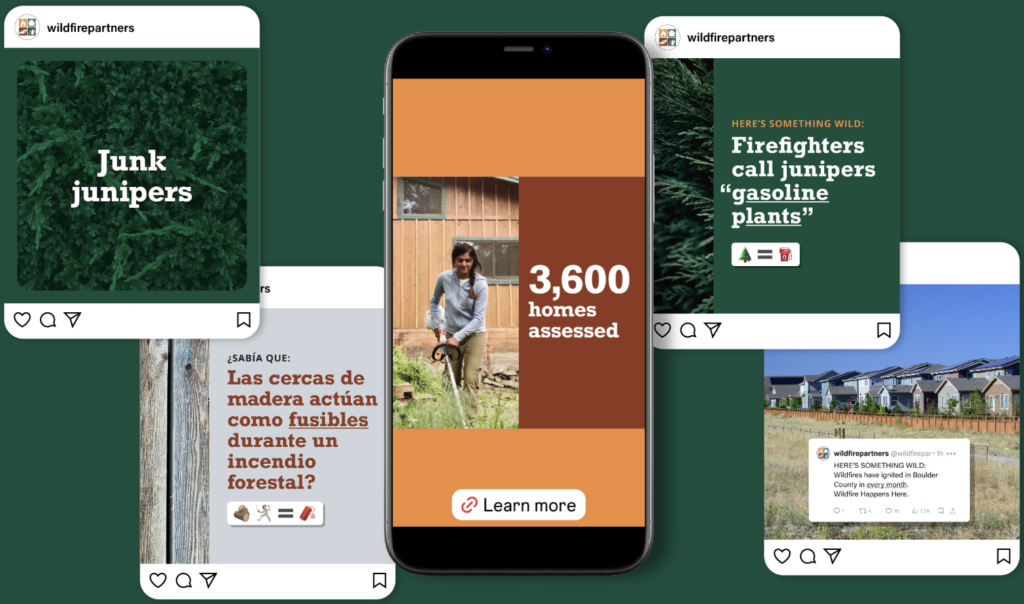
The Creative Challenge: Make Wildfire Action Feel Possible
Wildfire Partners already had a campaign line: “Wildfire Happens Here.” The statement was factually powerful—but emotionally incomplete. On its own, it risked reinforcing fear rather than motivating action.
The creative challenge was to transform that statement into something that energized people instead of overwhelming them.
Our insight came from a no-brainer universal behavior: people love a good deal. Wildfire Partners’ new Rebate Program offered rebates of up to $500 for homeowners who complete approved mitigation work— an incentivizing tool that could move people to action. So we reframed the message. If wildfire happens here, Boulder County wants to help residents prepare.
The hook became: “Wildfire happens here. Get up to $500 to make your home more wildfire-resilient.”
This reframing turned wildfire mitigation into an opportunity rather than an obligation. Creative executions across direct mail, digital ads, bus boards, and audio all highlighted specific actions residents could take to reduce home ignition risk, especially addressing embers—the leading cause of structure loss during wildfires.
The call to action was simple: Apply for the Wildfire Partners rebate and complete a mitigation step.

Making Wildfire Engagement Approachable
One of the most distinctive elements of the campaign was an experiential activation we called The Hotline. The installations, which popped up across the county from public libraries to farmers markets, featured a branded rotary phone that residents could pick up to hear Boulder County commissioners sharing short wildfire facts and preparedness tips.
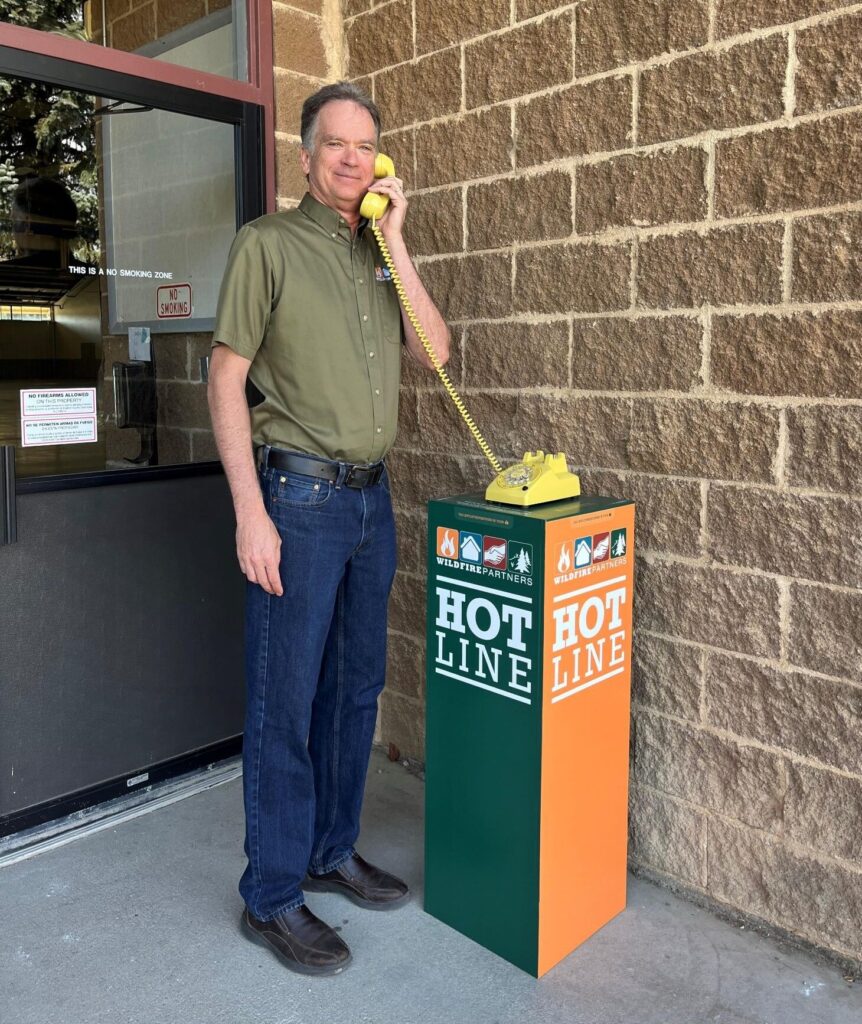
It was simple, unexpected, and slightly playful. More importantly, it reframed wildfire engagement as something approachable and human, rather than bureaucratic or intimidating.
In public safety communication, tone matters. When campaigns feel overly alarming or authoritative, audiences often disengage. The hotline helped reinforce a key idea: wildfire mitigation is a community conversation, not just a government directive.
Year One: From Awareness to Participation
By the end of year one, the campaign achieved substantial reach and measurable behavior change.
- Across traditional, digital, and experiential activations, the campaign delivered 15 million impressions—an average of 46 exposures per Boulder County resident. Digital advertising reached more than 211,000 unique users, while website traffic increased more than fivefold compared to the previous year.
- The rebate page quickly became the most visited page on the Wildfire Partners website, drawing 24,000 visits.
- Organic search behavior also reflected growing awareness. Google searches for “Wildfire Partners” increased 51% after advertising launched, indicating that the campaign was driving organic interest beyond paid media.
Participation followed awareness. The program recorded:
- 27% increase in initial home assessments
- 16% increase in new certifications
- 19% increase in recertifications
The rebate program became so popular that by mid-October, it reached capacity, moving the team to pause advertising earlier than planned.
Year Two: Scaling What Works
Rather than reinventing the campaign in year two, the strategy focused on doubling down on what proved effective.
The media mix remained largely the same, with increased investment in top-performing channels. At the same time, the team tested platforms such as Reddit and YouTube to explore new audience segments and message exposure.
The results were significant.
- Campaign impressions increased to 64 million, more than four times the previous year. Website traffic grew 20.6% year over year, and the rebate landing page again became the most-visited page on the site, with 34,000 views.
- Survey research conducted during the campaign revealed that awareness of Wildfire Partners increased by 10 percentage points across Boulder County.
- The campaign also drove 5,600 clicks to the rebate application, demonstrating sustained interest in taking mitigation action.
Most importantly, eligibility rates for rebate applicants remained high—evidence that residents clearly understood both the program and the actions required to participate.
Key Learnings
1. Fight for a resonant creative entry point.
Public safety campaigns often default to purely educational messaging. But creative hooks—like the rebate offer or the Hotline activation—can make complex issues approachable and memorable.
2. Cultural shifts require repeated exposure.
Behavior change rarely happens after a single message. Designing a coordinated media ecosystem allowed the campaign to reach residents dozens of times across different channels.
3. Successful campaigns evolve before they reset.
Year two focused on strengthening proven tactics while testing a few new channels. Refining a campaign is often more effective than starting over each year.
4. Traditional media still plays a crucial role.
Direct mail ensured every household encountered the campaign, while bus ads delivered high visibility in a county without billboards.
Looking Ahead
Colorado is entering a future where wildfire preparedness is no longer seasonal, it’s part of everyday life. Programs like Wildfire Partners help translate that reality into practical actions that help residents protect their homes and communities.
As we head into Year 3 of our campaign, we’re excited to deepen residents’ involvement with Wildfire Partners’ programming. For Vermilion, this work reflects what we mean by “creative gone good”: applying strategy, creative, and smart media planning to go beyond ad impressions and truly impact community. It’s the same philosophy that guides our partnerships with other local partners, like Community Foundation Boulder County, RMEQ, and others.