
Brands are businesses, AND we know brands can also hold privileged places in our lives. We bring them into our homes; we play favorites among them; we give them our money in exchange for products or to forward the causes we believe in.
With so much integration into our day-to-day, strong brands aren’t just brands. They transcend the label to become characters in our lives, with real roles to play.
I’ve been a fiction writer for as long as I’ve been a copywriter, and in my fiction critique group we often compliment each other by saying things like “man, this is such an Ellen story” or “is this an Ellen passage or what?” The best fiction is the kind you pick up and know, without checking the cover, was written by your favorite author. It’s like walking into a room and finding all your favorite furniture there—cozy and familiar and waiting for you.
Brand storytelling is the same: we come to recognize brands as part of our network, and—for the most successful—as living things we have to share with friends.
And so it follows that any time we cross paths, we want to find them as we left them: consistently behaving and sounding like the characters we know them to be.
Building brand identities is one of our specialties at Vermilion, and it’s some of our very favorite work to do. And, like developing a character, part of building a brand identity is crafting that brand’s personality. Here’s why that’s one part of the process you can’t skip. Or worse, try to wing it.
Brand personality delivers a consistent brand experience
When I write fiction, the first thing I ask myself about my main character is: what do they want? Not everything they want, but the first and most important thing they’ve gotta have. The one thing that’s going to drive them forward through their story.
When it comes to the brand development process, this is where we start, too. At Vermilion, we call it The Need: the brand’s driving context. This brand strategy approach asks: Why does the world need this brand, and what can it offer that no other brand can?
Building a brand personality for Boulder Chamber
For example, take our client Boulder Chamber: a leader that strengthens business and advances economic vitality to cultivate strong communities. We identified The Need for Boulder Chamber as “The well-being of our communities is powered by the businesses that support our economy and people.”
Fictional characters want lots of things, but their key, driving desire is what makes them protagonists worth writing about.
And a brand’s foundational Need is what makes it resonant, valuable, and interesting enough to pay attention to.
For Boulder Chamber, that means serving as an indispensable resource for Boulder, Colorado, by supporting a vibrant, engaged community of professionals and collaborating across sectors to achieve meaningful outcomes.
The Need (combined with a few other proprietary-to-us ingredients) helps us arrive at the Brand Platform, the core idea that drives everything the brand says and does. For Boulder Chamber, it’s Your Chamber Does That. It captures the depth and breadth of support the Chamber offers in a tone that’s both delightfully anticipatory AND refreshingly frank.
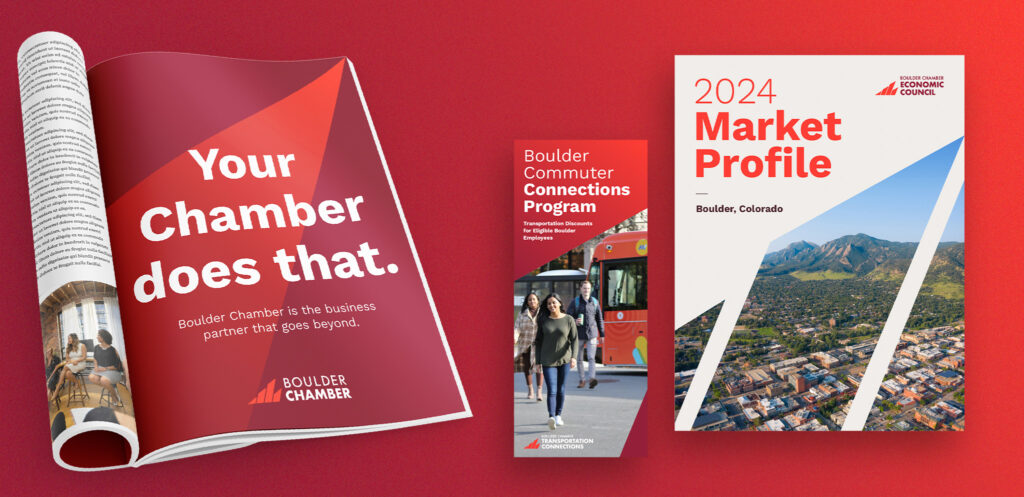
Starting with a pressure-tested brand foundation ensures we always know who our character is and the important role they show up to play. For consumers, a consistent brand experience means folks remember, seek out, and feel kinship with your brand.
Activating a personality that’s true to your brand’s essence ensures you aren’t just a trendy voice in the category, but a brand with staying power.
Brand personality, driven by a strong brand archetype, helps every author stay in character
When I’m writing a book, it’s a one-woman job—but keeping a brand’s voice/tone and look/feel on-personality often falls to several people. When more than one person is writing for a brand, everyone has to know how to employ the brand character.
Part of building a brand identity everyone can rally around is committing to a brand archetype. Brand archetypes are branding strategies that consist of representative descriptions of how a brand acts in the world. There are 12 primary archetypes, with subtypes beneath them, modeled on psychologist Carl Jung’s 12 personality types. They include The Citizen, The Jester, The Lover, The Magician, The Rebel, The Hero, The Explorer, The Innocent, The Sage, The Sovereign, The Creator, and The Caregiver.
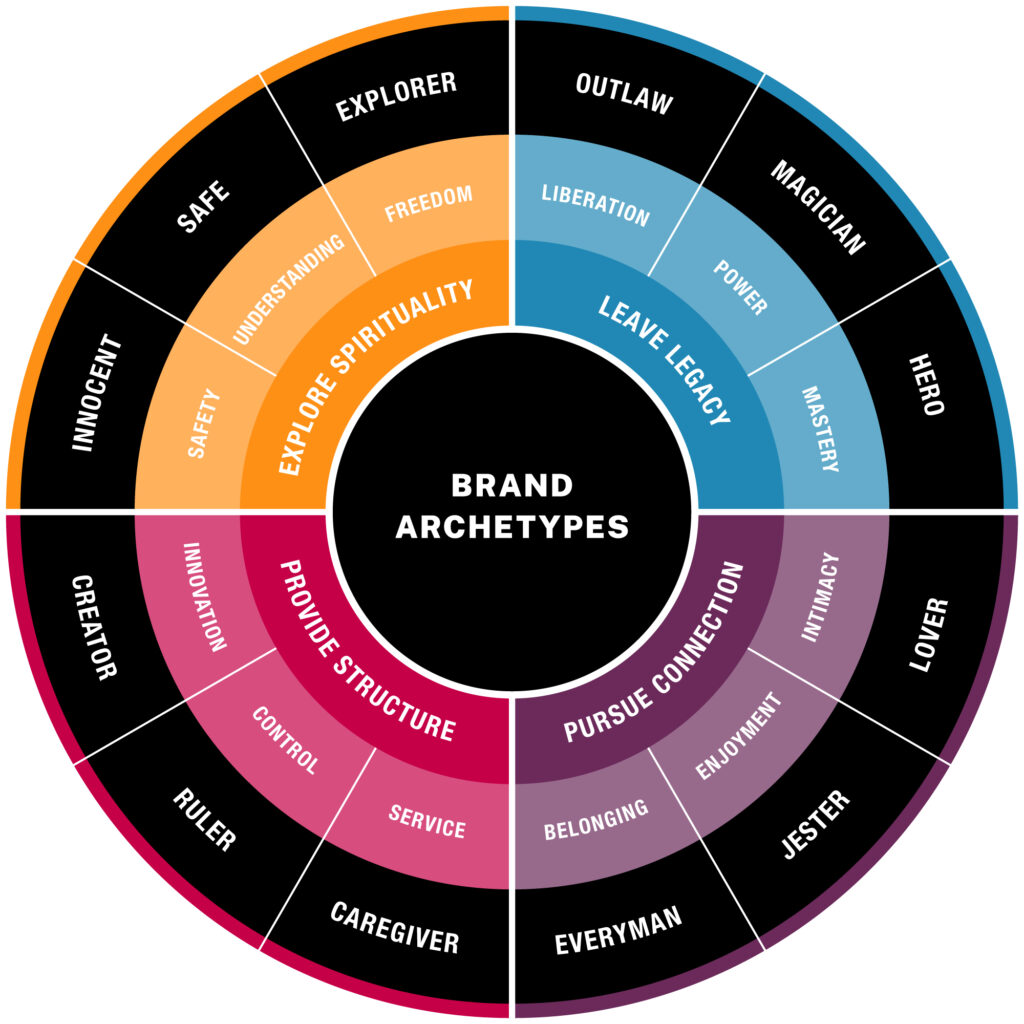
Our exploration for Boulder Chamber led us to The Rebelarchetype, after which we drilled down to The Activist: a character defined by its efforts to effect change. As a brand that holistically elevates Boulder’s economic and business vitality, The Activist captures Boulder Chamber’s spirit of dedication to pushing for better.
A brand’s archetype becomes a template for everything they do: when we write social copy, develop signage, put up a webpage—anything at all—for Boulder Chamber, we know it needs to act in the spirit of The Activist.
Fictional characters feel real to us when we understand who they are: when their characterization is so consistent, we can predict how they’ll behave in every moment or how they’ll interpret every turn of events. The same goes for brand storytelling: brands take on living, valued roles in our routines when they show up with such consistent, personal characterization that they could be flesh and bone.
A few of our favorite character-driven brands:
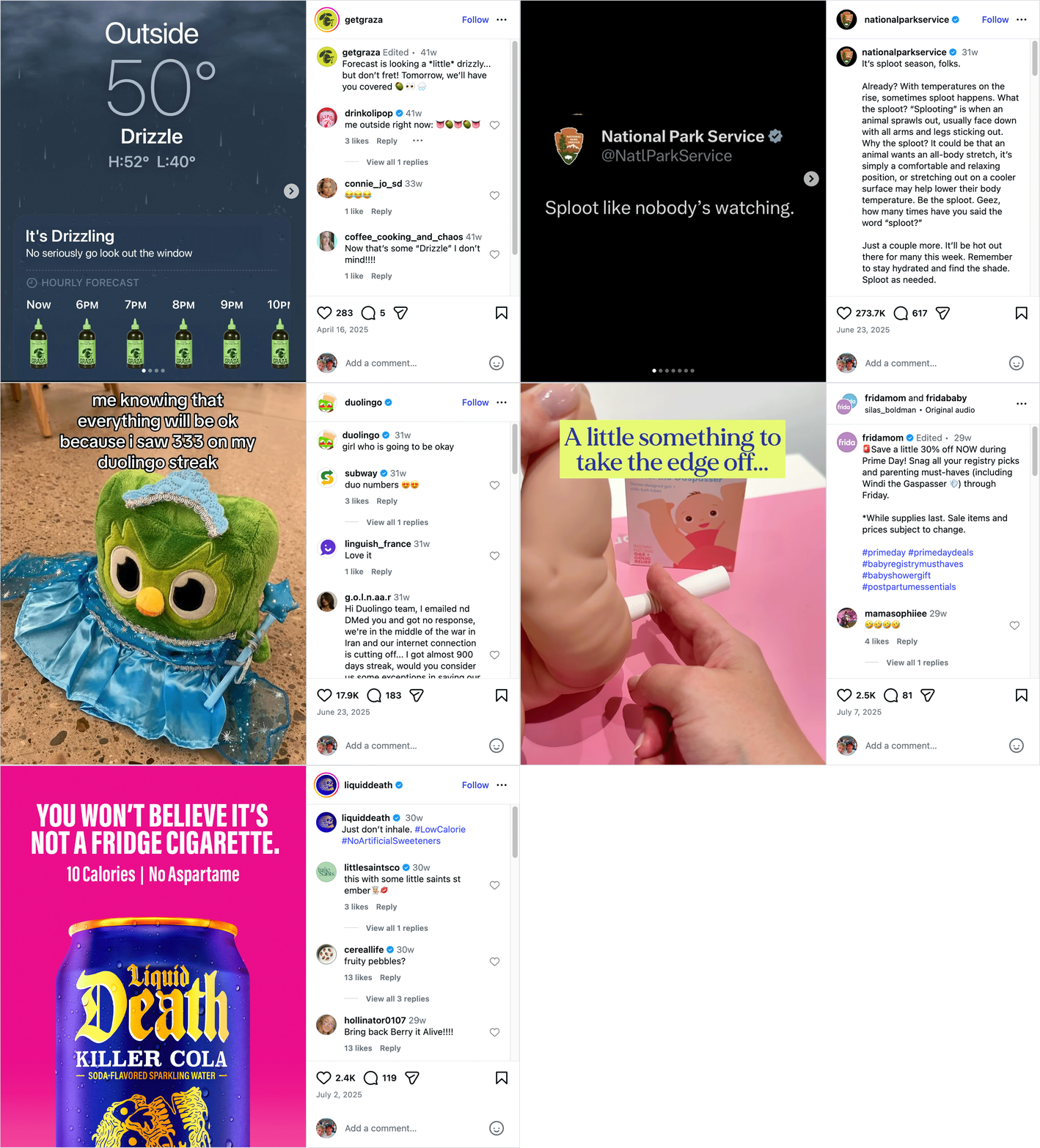
With a strong brand personality guided by the north star of your archetype, everyone in your organization will have a blueprint to consistently communicate in the voice of your brand.
Every brand needs a brand styleguide—reference the playbook, often
Once we know a character’s—or brand’s—foundational characteristics and archetypal role, we can get down to the details. In fiction, this is a character bible: how does this character dress? What’s their first memory? For brands, this is a brand styleguide, aka brand guidelines. Not every detail will come into play, but the more we know, the richer (and easier) our storytelling becomes.
A strong brand styleguide is one of the most important branding strategies. It’s a blueprint for everyone in your organization to stay on-brand in communications and deliver a consistent experience to anyone who crosses paths with your brand.
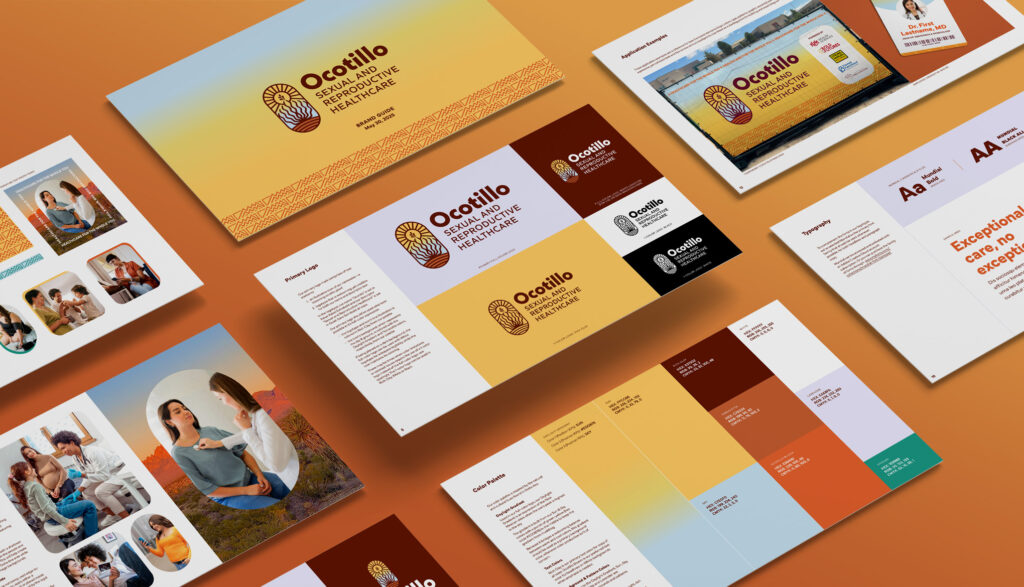
A strong brand styleguide should thoughtfully color in the lines of your brand, starting with your brand’s foundation and archetype as a reminder and level-set each time someone opens the document.
Other important elements include:
- Brand voice and tone
- A manifesto to capture the brand’s spirit in action
- Brand colors and fonts/typography
- Logo usage guidelines
- Supporting graphic elements
- Example applications (to show how it all works together!)
The brand styleguide is a how-to for the brand’s personality. Anyone picking it up and peering inside should see to the heart of the brand—the character—you’ve created, and be able to use it to write and design in the spirit of that brand.
A strong brand character has the power to elevate brands to the level of treasured friends—ones we make space for in our lives and seek out for their familiarity. The key is putting in the care upfront to characterize them during your brand development process. Because without a personality, there’s no character to interact with at all—and, it follows, no meaningful relationship to be formed between brand and consumer.